Selected Publications
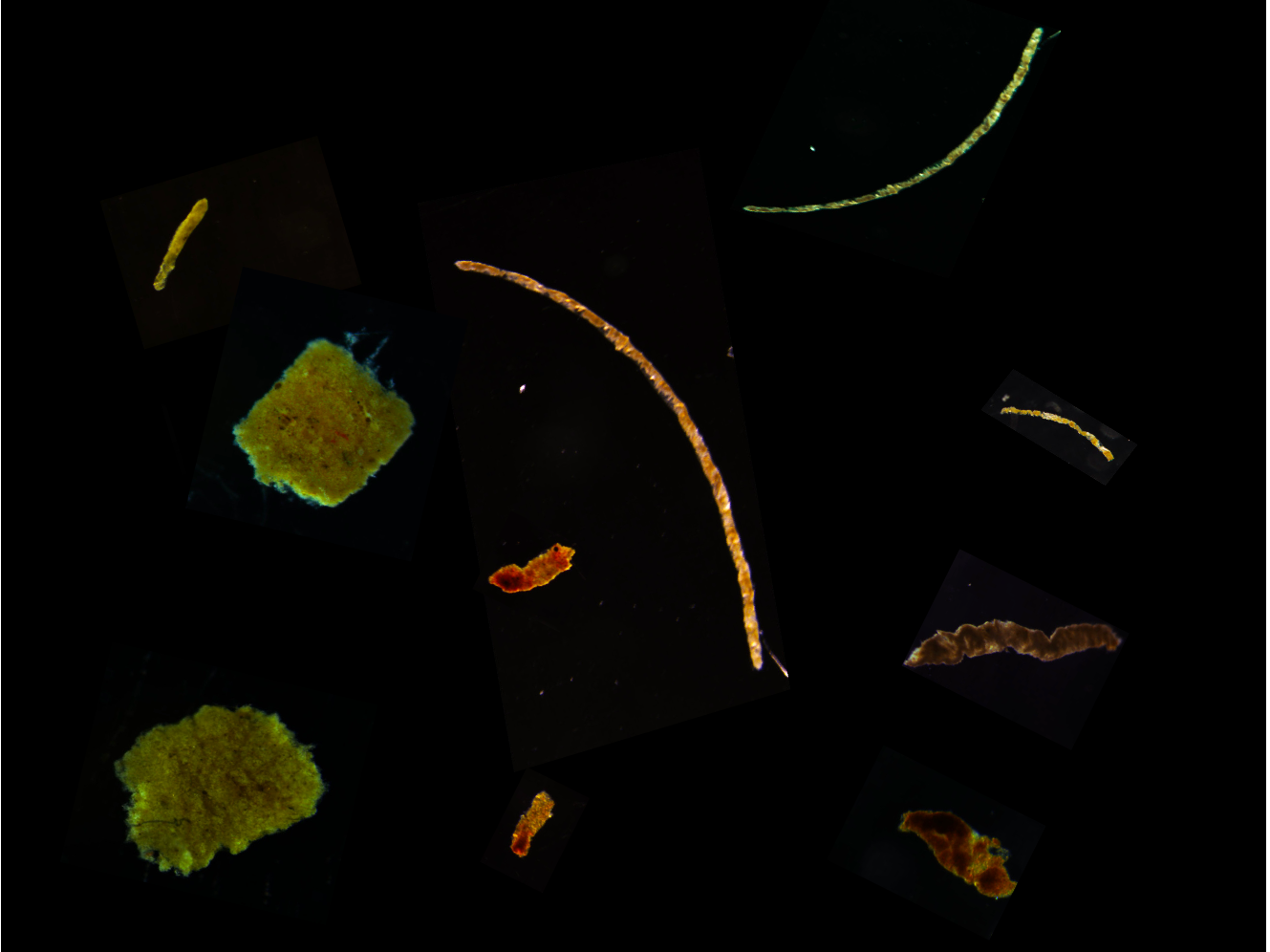
Fecal pellet packaging enhances marine carbon sequestration
Karthäuser et al. 2026 – Limnology & Oceanography
Marine animals package organic materials into fecal pellets. We measured carbon content, sinking speed, respiration rate, size and shape, and biological composition of individual pellets. Pellets were composed randomly of diverse food sources, smaller pellets were often more compact than larger pellets, and the pellets’ packaging limited their remineralization to ~2% carbon loss per day.
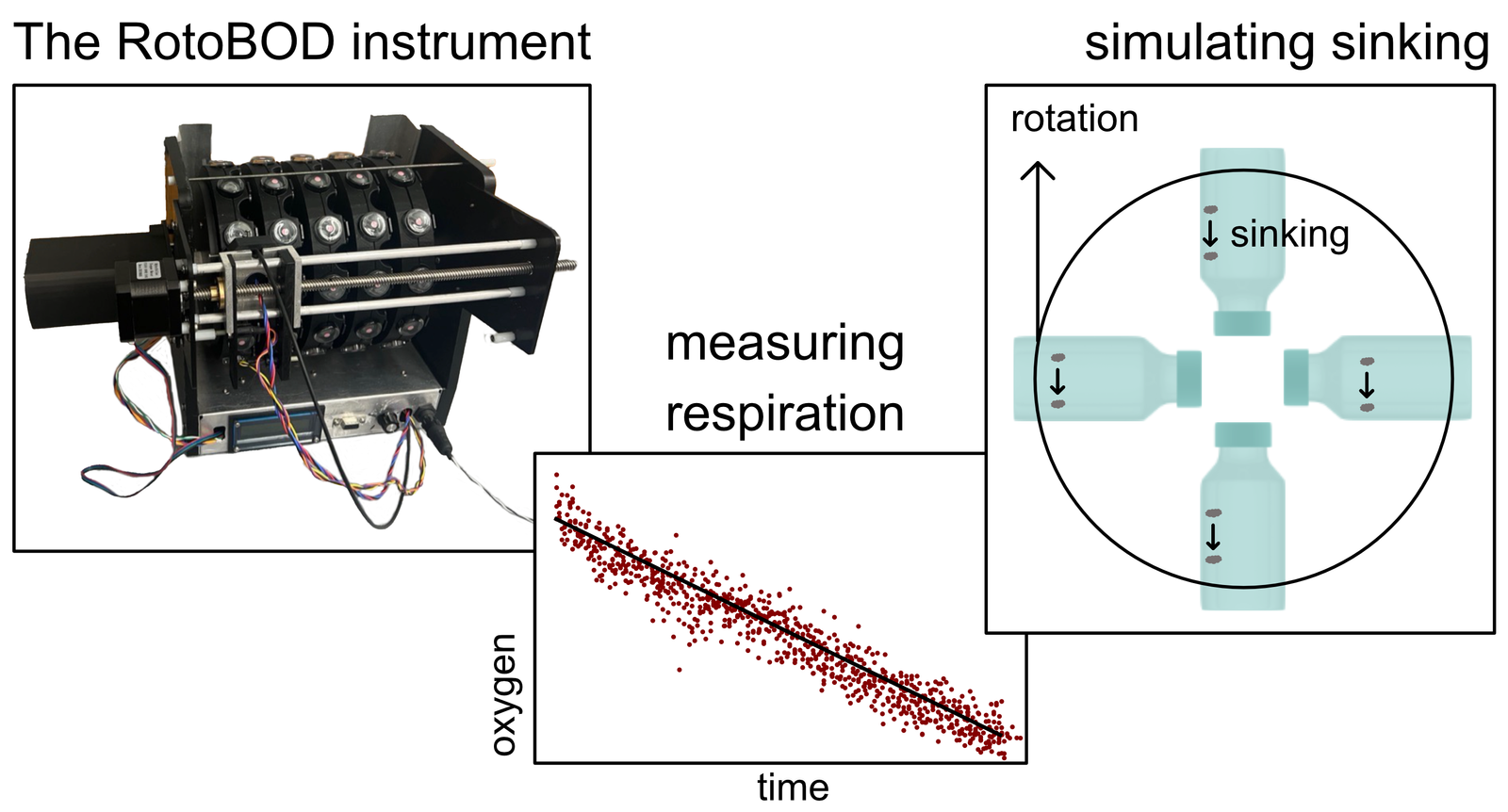
RotoBOD─Quantifying Oxygen Consumption by Suspended Particles and Organisms
Karthäuser et al. 2024 -Environmental Science & Technology
A new method of keeping marine snow particles and small organisms under near-natural conditions while carrying out experiments such as oxygen consumption and nitrogen cycling measurements.
Small sinking particles control anammox rates in the Peruvian Oxygen Minimum Zone
Karthäuser and Ahmerkamp et al. 2021, Nature Communications
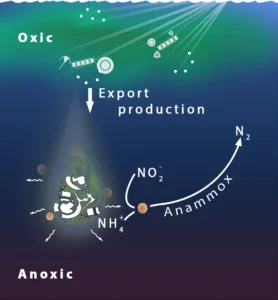
Particle abundances correlated with anaerobic ammonium oxidation rates in our experiments offshore Peru, but the process did not occur inside the particles. We discovered how especially small particles play a key role in supplying ammonium to the specialized anaerobic bacteria that carry out this important nitrogen-loss process.

Comparative genomics of a vertically transmitted thiotrophic bacterial ectosymbiont and its close free-living relative
Espada-Hinojosa and Karthäuser et al., 2023, Mol. Ecology Resources
I analyzed the genome and growth of a sulfur-oxidizing bacterial strain. My joint first author Salvador Espada-Hinojosa did the same for a closely related symbiotic organism. In this study we compare the two organisms and genomes and describe how they are adapted to symbiotic and free-living life styles.
Animal life in the shallow subseafloor crust at deep-sea hydrothermal vents
Bright and Gollner et al., 2024, Nature Communications
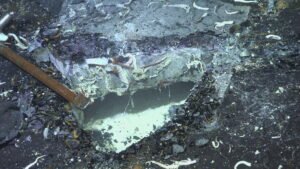
The most unexpected finding – while studying life around and underneath hydrothermal vents we discovered that animals do not only travel in the ocean’s subsurface as larvae, but even live beneath the seafloor.
Dem Ozean geht die Luft aus
Karthäuser, Schelten and Oschlies 2018
Review article for a general scientific magazine: Spektrum der Wissenschaft (German version of Scientific American, was translated for French version Pour la Science)